Pogo Pin Manufacturer selection is an important decision for electronic product developers, sourcing teams, and OEM/ODM buyers. A pogo pin may look like a small component, but it directly affects electrical contact stability, charging performance, signal transmission, product durability, and user experience.
Pogo pins are widely used in charging docks, wearable devices, medical electronics, smart hardware, testing fixtures, battery contacts, handheld terminals, magnetic connectors, and PCB modules. Because these applications often require repeated contact and stable spring performance, choosing the right Pogo Pin Manufacturer is critical.
A suitable manufacturer should offer more than a standard product list. The best partner should understand structure design, contact resistance, spring force, plating quality, current rating, tolerance control, testing requirements, and long-term production stability.
What Is a Pogo Pin Connector?
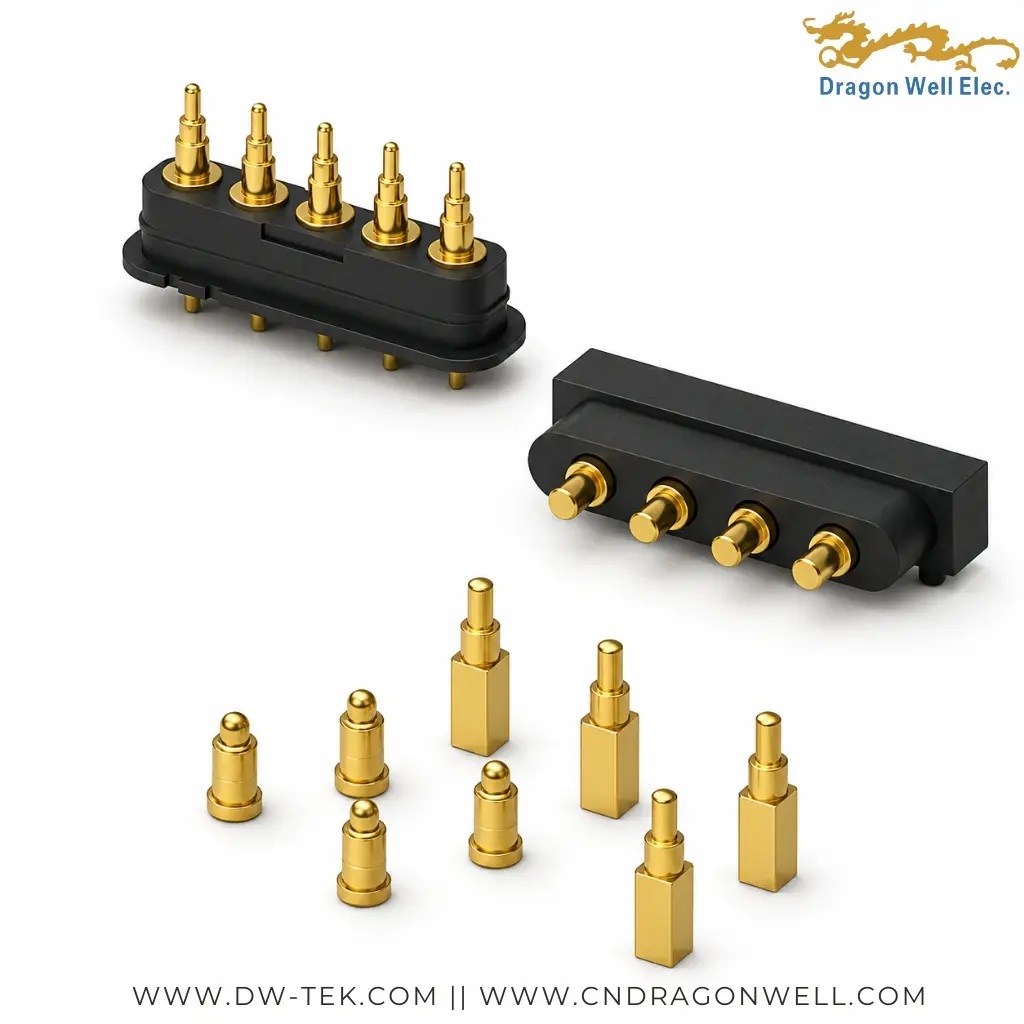
A pogo pin connector is a spring-loaded contact used to create a temporary or repeated electrical connection between two electronic surfaces. It usually includes a plunger, barrel, internal spring, and contact structure.
When pressure is applied, the spring compresses and allows the pin to maintain stable contact with the mating surface. This makes pogo pins useful where products need repeated docking, charging, testing, or board-to-board contact.
A reliable pogo pin connector should provide stable spring force, low contact resistance, smooth movement, proper plating, and consistent mechanical performance.
Why Pogo Pin Manufacturer Selection Matters
Choosing the right Pogo Pin Manufacturer matters because pogo pins are often used in applications where unstable contact can quickly cause product problems. Poor spring design, weak plating, loose tolerance, or inconsistent production can lead to charging failure, signal interruption, high resistance, or short service life.
For OEM electronics, these problems may create customer complaints, warranty issues, and production delays. A qualified manufacturer helps reduce these risks by providing proper engineering support, accurate specifications, and stable batch quality.
The right Pogo Pin Manufacturer can also help improve design efficiency. Instead of forcing engineers to adapt the product around a poor connector, a good supplier can recommend the correct pin type, height, stroke, plating, force, and assembly method based on the real application.
7 Powerful Tips for Choosing the Right Pogo Pin Manufacturer
1. Check Engineering and Customization Ability
A strong Pogo Pin Manufacturer should be able to support custom requirements. Pogo pins are not always one-size-fits-all components. Different products may require different pin height, stroke, force, diameter, current rating, plating, and mounting style.
For example, a wearable charging dock may need compact pogo pins with smooth contact. A testing fixture may require high mating cycles. A power contact may require stronger current capacity.
Before choosing a supplier, check whether the manufacturer can provide engineering review, drawing support, sample development, and custom structure options.
2. Review Contact Resistance and Electrical Performance
Contact resistance is one of the most important specifications in pogo pin selection. High or unstable resistance can affect charging efficiency, signal quality, and power transmission.
A reliable Pogo Pin Manufacturer should clearly provide contact resistance data and explain the test condition. For power applications, current rating and temperature rise should also be reviewed carefully.
Electrical performance should match the final product requirement, not just the catalog value. This is especially important for charging contacts, battery interfaces, test equipment, and smart electronic devices.
3. Evaluate Spring Force and Mechanical Life
The spring is the core part of a pogo pin. If the spring force is too weak, contact may become unstable. If the force is too strong, it may damage the mating pad or make assembly difficult.
A suitable Pogo Pin Manufacturer should help select the right spring force based on the application. The manufacturer should also consider compression stroke, working height, mating cycle life, and mechanical durability.
For products with frequent docking or charging, lifecycle testing is especially important. A pogo pin must maintain stable contact after repeated use.
4. Check Plating Quality and Material Selection
Pogo pin performance is strongly affected by material and plating quality. Gold plating is commonly used because it supports better contact performance and corrosion resistance.
However, plating thickness, base material, spring material, and surface finish must be selected according to the application. A low-cost plating choice may reduce long-term reliability.
A professional Pogo Pin Manufacturer should be able to explain plating options clearly and recommend a suitable solution based on contact cycles, environment, current load, and cost target.
5. Confirm Quality Control and Testing Process
Quality control is a key factor when choosing a pogo pin supplier. Small dimensional changes can affect spring movement, contact height, assembly fit, and electrical performance.
A dependable Pogo Pin Manufacturer should have inspection processes for dimensions, spring force, contact resistance, appearance, plating, and mechanical function.
For OEM projects, batch consistency is critical. Before mass production, buyers should confirm sample approval, incoming material control, production inspection, and final testing procedures.
6. Check Production Capacity and Delivery Stability
A suitable manufacturer should not only make good samples. The company must also maintain stable quality during mass production.
Some suppliers can produce samples quickly but struggle with batch consistency, delivery schedules, or engineering changes. For long-term OEM and ODM projects, stable supply is just as important as product design.
Before choosing a Pogo Pin Manufacturer, ask about production capacity, lead time, packaging method, monthly output ability, and support for repeat orders.
7. Look for OEM and ODM Project Experience
Pogo pin projects often require communication between the buyer, engineering team, and supplier. A manufacturer with OEM and ODM experience can better understand drawings, tolerances, assembly needs, and application risks.
An experienced Pogo Pin Manufacturer can help identify possible issues before mass production. This may include insufficient stroke, poor mating alignment, unsuitable current rating, wrong plating choice, or weak housing design.
Good project experience helps reduce development time and supports smoother product launch.
Common Applications of Pogo Pins
Charging and Docking Devices
Pogo pins are widely used in charging docks, smartwatches, handheld devices, earbuds, tablets, and portable electronics. These products need stable contact for repeated charging.
Magnetic Connectors
Magnetic connector assemblies often use pogo pins for power and signal contact. The magnetic structure helps alignment, while the pogo pin provides spring-loaded electrical contact.
Testing Fixtures
In PCB testing and production testing, pogo pins are used to contact test pads. They allow temporary electrical connection without soldering.
Medical and Industrial Electronics
Medical devices, industrial handheld terminals, barcode scanners, and measuring instruments may use pogo pins for charging, docking, or modular contact systems.
Battery and Power Interfaces
Pogo pins can be used in battery packs, power modules, and internal contact systems where repeated contact and stable power transfer are required.
Key Engineering Factors to Check
Before finalizing a pogo pin design, engineers should review:
- pin height
- working stroke
- spring force
- contact resistance
- rated current
- rated voltage
- plating material
- plating thickness
- barrel and plunger material
- operating temperature
- mating cycle life
- mounting method
- PCB pad design
- alignment tolerance
- packaging requirement
These details help ensure that the pogo pin connector fits the real product environment and supports stable long-term performance.
Questions to Ask Before RFQ
Before sending an RFQ to a Pogo Pin Manufacturer, prepare clear technical details. This helps the supplier recommend the right product faster.
Useful questions include:
- What is the application?
- Is the pogo pin used for charging, signal, testing, or grounding?
- What current rating is required?
- What working height and stroke are needed?
- How many mating cycles are expected?
- What plating requirement is needed?
- Is a custom housing required?
- Is the product for prototype or mass production?
- What is the target monthly quantity?
- Are drawings or samples available?
Clear answers help reduce quotation mistakes and speed up the development process.
Why Work with Dragon Well Electronics
Dragon Well Electronics supports connector and interconnect solutions for consumer electronics, industrial devices, communication equipment, automotive electronics, medical-related electronics, PCB modules, and OEM/ODM hardware projects.
For Pogo Pin Manufacturer support, Dragon Well Electronics can help with:
- pogo pin connector solutions
- spring-loaded contact pin selection
- custom pogo pin connector evaluation
- magnetic connector application support
- PCB module contact solutions
- OEM and ODM project cooperation
- engineering communication for product development
- stable manufacturing and long-term supply needs
If your project involves charging contacts, magnetic connectors, spring-loaded pins, PCB testing contacts, docking stations, battery contacts, or custom connector assemblies, Dragon Well Electronics can support reliable pogo pin solutions for your application.
Order and RFQ
Need support from a suitable Pogo Pin Manufacturer for custom pogo pins, spring-loaded connectors, magnetic connectors, charging contacts, or PCB contact solutions?
Please share your application, required specification, pin height, stroke, spring force, current rating, plating requirement, mounting method, drawing, sample, quantity, and project details for evaluation.
Websites:
www.dw-tek.com
www.cndragonwell.com
Email:
prothick@cndragonwell.com || info@dw-tek.com
Connect with Us
LinkedIn: https://www.linkedin.com/company/dragon-well-electronics-co-ltd
Instagram: https://www.instagram.com/dragonwell_electronics
Facebook: https://www.facebook.com/DragonWellElectronics